Is your hair breaking or shedding? Simple observations to guide care
Detangling the lengths and caring for roots are different jobs. Knowing breakage from shedding helps you place Maria Lopez with Procapil 3.5% where it belongs.
| Breakage | Damage involving the hair shaft |
|---|---|
| Shedding | Hair leaving the scalp |
| Short hairs | Do not alone prove breakage or new growth |
| A useful comparison | The same washing and styling conditions |
In this guide
- Why does 'falling out' cover two different questions?
- Observe shed hair without pulling out a test sample
- If lengths break, review the moment you pull
- If shedding is more noticeable, put events in order
- Compare similar circumstances, not isolated counts
- Conditioner for the lengths, Maria Lopez for the scalp
Why does 'falling out' cover two different questions?
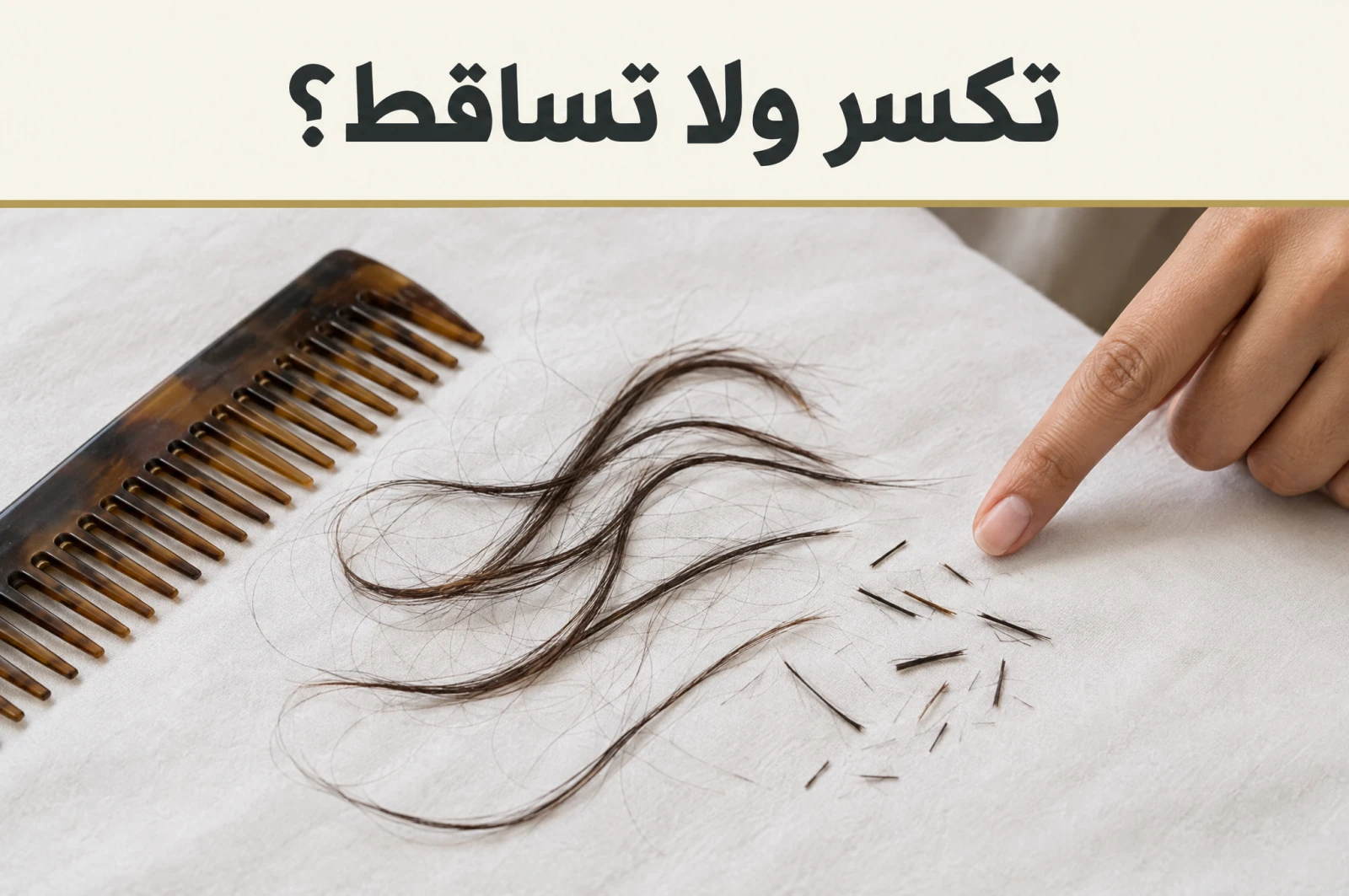
In everyday language, we say hair is falling whether we find a short piece or a long hair. Damage along the shaft can make it fragile and break, as the AAD explains. Some shedding is part of the normal cycle, while increased shedding has other explanations. Describing what you see before choosing new care is useful. Consider two observations: ends catch in the comb, or the parting looks wider. The first prompts a review of length handling; the second deserves density and scalp assessment. Both can occur in one person, so do not choose one and dismiss the other.
Observe shed hair without pulling out a test sample
Look at what remains in the brush during your usual routine, without plucking hairs to compare them. Short pieces can be broken hair, but layers in a haircut or new growth can also explain their length. A photograph alone does not establish the cause. Use the table to describe what you see: are the ends tangling, does the part look wider, and has washing or coloring changed? These observations help direct care to each area; they are not a test that identifies a type of hair loss.
| What you observed | What to check | Observation limits |
|---|---|---|
| Short pieces with difficult detangling | Combing, heat, and length care | Length alone does not settle the cause |
| More hair coming out than usual | Onset and preceding changes | The amount in one wash is insufficient |
| A widening parting or patch | The area affected, density and when the change began | Do not explain every reduction as breakage |
If lengths break, review the moment you pull
Identify the difficult moment: a comb stopping at a knot, a tangled band, or excessive towel rubbing. Start there. Gloucestershire NHS guidance recommends gentle handling, conditioner to coat the shaft and reduce friction, and fingers or a wide-toothed comb instead of pulling. For example, keep the comb near the conditioner so you do not search while hair is tangled. Divide the task into small, manageable areas. Do not force a difficult knot while rushed; pause and organize the step instead of using more force to finish.
If shedding is more noticeable, put events in order
The AAD explains that increased shedding can appear months after childbirth, illness or major stress. That context helps establish timing without proving a single cause. Note approximate dates and new medicines or changes, and do not stop prescribed medication based on a guess. Separate more hairs coming out from a loss of density: you may notice one or both. With persistent thinning or new patches, do not increase the serum or improvise a treatment; the cause needs clarifying rather than covering with a cosmetic routine.
Compare similar circumstances, not isolated counts
Hair found after a longer gap between washes is not directly comparable with hair found after a short gap. Note changes in brushes or styling too. This keeps your observations grounded in your routine rather than a worrying number seen once. Choose a practical question: are knots easier to release, are the ends still breaking, or does the same part look wider in the same light? Keeping those observations separate helps distinguish gentler handling of the lengths from identifying the reason for reduced density.
Conditioner for the lengths, Maria Lopez for the scalp
If knots and breakage are the main problem, keep conditioner and gentle detangling in your routine. For a separate root-care step, Maria Lopez with Procapil 3.5% comes in a 50 ml dropper bottle for application between sections; it does not replace conditioner or repair split ends. After rinsing out the products that require it, apply to a clean, intact scalp, massage gently and leave in without rinsing. Avoid wounds and inflammation; stop and rinse if irritation occurs. Find more about this step and the Maria Lopez order form further down this same page.
Frequently asked questions
Is every short hair a broken hair?
No. A haircut or new growth can also explain short hairs. Look at the ends and tangling too, rather than judging from length alone.
Can breakage and shedding happen together?
Yes. Give the lengths and scalp their own care steps without dismissing one observation because of the other.
Should I pull my hair to test the roots?
No. Do not pull hairs out as a test. Observe only what comes away during your normal washing and styling.
Where does Maria Lopez fit if I use conditioner?
Rinse-out conditioner belongs in the washing stage for the lengths. Afterwards, apply Maria Lopez to a clean, intact scalp, massage gently and leave in without rinsing.
Order now
